RV Water Damage in Palm Bay: Flat Terrain, Driveway Drainage, and Roof Leaks
Palm Bay's Flat Terrain - The Standing Water Problem
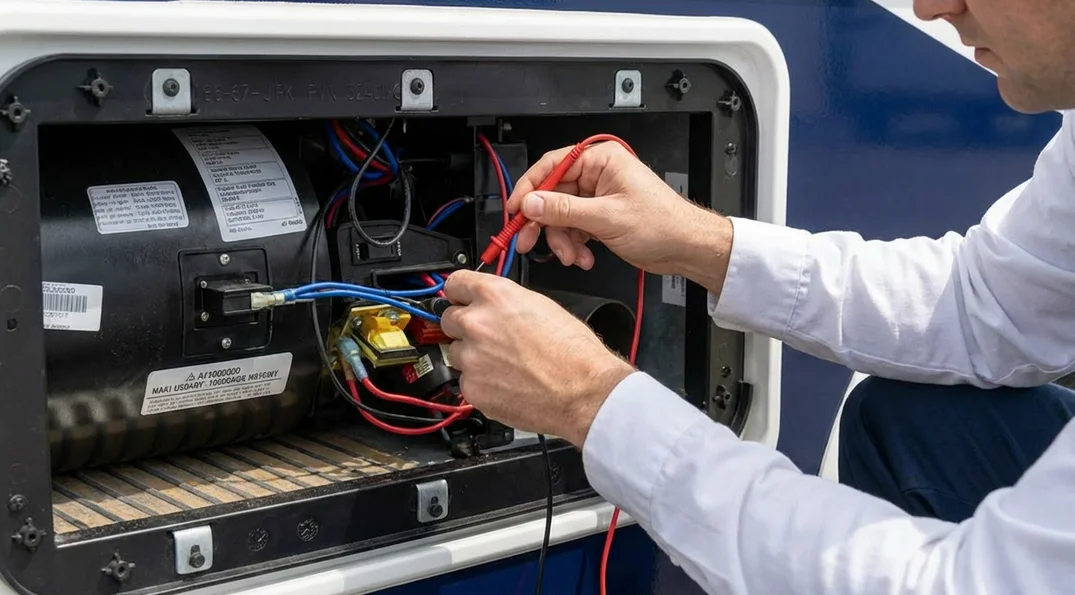
Palm Bay is one of the flattest cities in Brevard County. The terrain is essentially a coastal plain with minimal grade - which means residential driveways in Palm Bay do not drain the way driveways do in hillier areas. After a heavy summer rain, water pools under and around vehicles parked on flat or slightly crowned concrete.
For RV owners, this creates a water damage risk that most RV manuals do not address. Lower sidewall caulk joints, compartment floor penetrations, and underbelly vents that sit close to grade level are designed to shed water from above, not to resist standing water from below. After a summer storm drops 2 to 3 inches of rain in an hour, an RV parked on a flat Palm Bay driveway can sit in a shallow pool for hours.
We regularly find condensation and moisture intrusion in RV underbelly areas on Palm Bay driveways that show no signs of roof leaks. The water is coming from underneath, not from above. This is a Palm Bay-specific problem that is not common at campgrounds with graded sites or in coastal markets where driveways tend to have more natural grade toward the street.
The fix involves two things: improving driveway drainage with grading or a French drain at the front of the parking area, and sealing or replacing any underbelly penetrations that have compromised gaskets. We address both the entry point and the resulting moisture damage.
Roof Seal Failure - The Most Common Water Entry Point
Roof seal failure is still the most common water entry point for Palm Bay RVs - even with the flat-terrain drainage issue. Palm Bay's 54 annual inches of rain, concentrated in the June through September rainy season, pushes water through any compromised lap sealant joint within minutes of a storm starting.
Florida's UV index is among the highest in North America. Dicor self-leveling lap sealant on a south-facing roof exposed to full Palm Bay sun can crack and lose adhesion in as little as 18 months without maintenance. The crack starts as a hairline that is easy to miss during a casual walk-around, but admits enough water during a heavy summer storm to saturate a wall cavity in a single event.
The most common roof entry points on Palm Bay RVs are AC unit base seals, roof vent bases, and antenna mounts. These penetrations go through the roof membrane and require lap sealant on all four sides of the housing. When the sealant cracks or pulls away from the ABS plastic housing, water channels directly into the ceiling cavity.
By the time you see a stain on the ceiling, the water has usually been in the cavity for days or weeks. Moisture migrates horizontally through insulation before appearing on the interior surface. The stain is 2 to 3 feet from the actual entry point more often than not.
Condensation in Unventilated Driveways
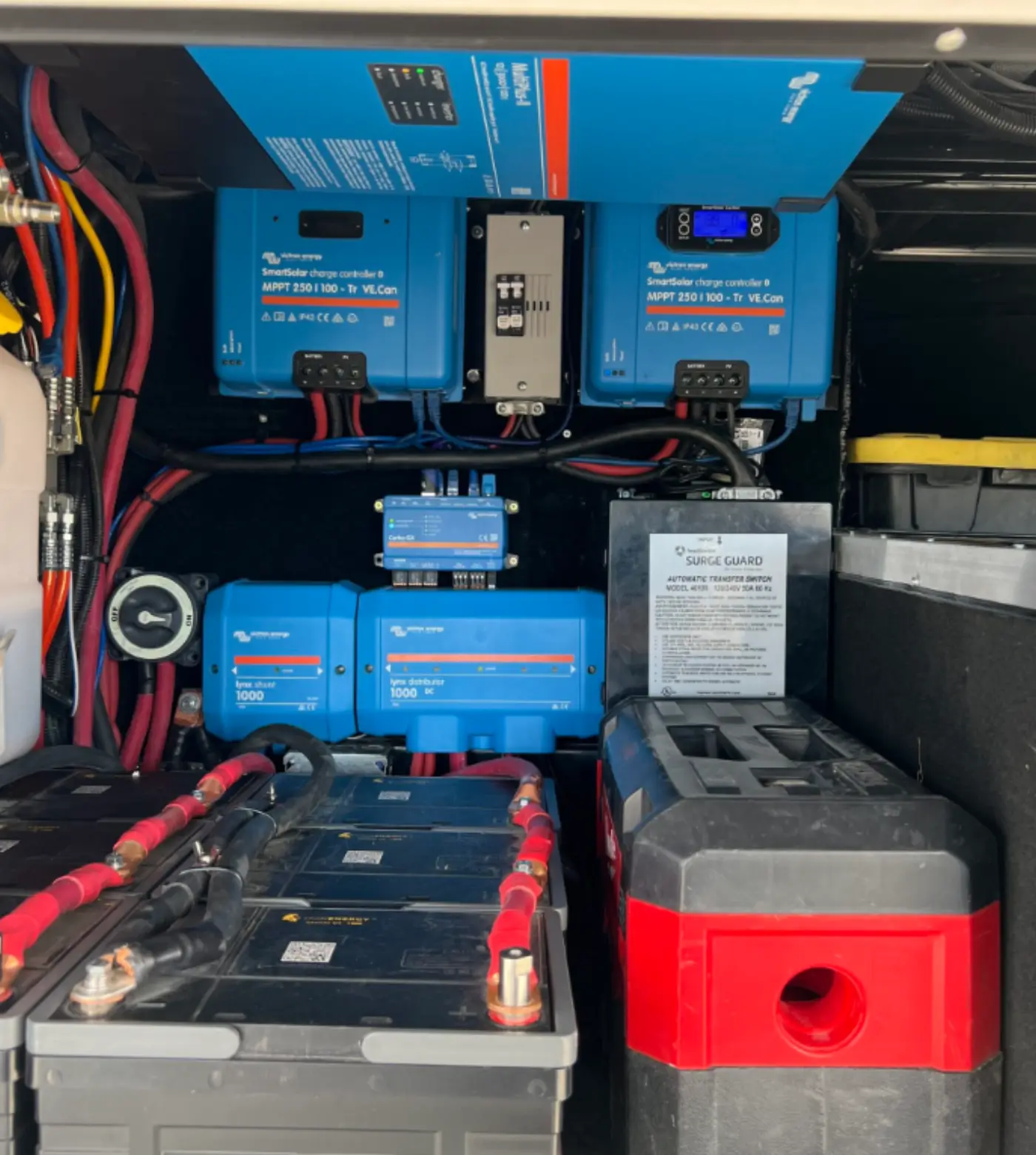
Palm Bay's humidity creates a condensation problem that is more pronounced on rigs stored in enclosed or partially enclosed conditions - against a fence, under a carport, or backed into a narrow driveway with minimal airflow.
When an RV's interior is significantly cooler than the ambient air (from the previous night's cool-down), and humid morning air enters through any opening, condensation forms on the cooler surfaces inside the rig. Over time this condensation is absorbed by wood substrate materials, insulation, and carpet.
Condensation moisture does not come through the roof or the walls - it is generated inside the coach from the humidity differential. The result is a soft, musty smell and eventual mold growth in areas that show no visible leak path from outside.
The solution is ventilation. MaxxAir vent covers allow passive airflow through roof vents even when the rig is closed up - they prevent rain entry while letting humidity equalize.
We recommend MaxxAir covers on every vent for Palm Bay rigs stored in areas with restricted airflow. Running a small dehumidifier inside the coach during storage also helps if the rig is on shore power.
What Rainy Season Roof Resealing Actually Covers
A full RV roof reseal covers all penetrations with new Dicor self-leveling lap sealant: AC unit mounting feet, vent covers, antenna bases, TV and solar cable entries, sidewall-to-roof joints, and corner moldings. On a typical 25-30 foot travel trailer or Class C motorhome, a full reseal requires 2-3 tubes of Dicor and takes 2-3 hours.
The cost for a mobile full reseal in Palm Bay runs $200-500 depending on the size of the rig and the number of penetrations. A rig with solar panels, two ACs, a MaxxAir vent fan, a TV antenna, and exterior speakers has significantly more penetrations than a basic rig with one AC and a standard roof vent.
Annual resealing before the June rainy season is the right cadence for Palm Bay. Some Palm Bay owners add a mid-season check in August - after the heaviest storm months have tested the seals but before the second half of storm season. That mid-season check catches any sealant that failed under the first round of summer rains.
The labor cost of an annual reseal - typically $200-400 for a standard travel trailer - is a fraction of the cost of one week's water intrusion through a failed AC boot seal. We carry Dicor and can reseal at your driveway, storage lot, or campsite on the same call as any other service.
What to Do After a Tropical Storm or Heavy Rain Event

After any tropical system or heavy multi-day rain event in south Brevard County, inspect your RV before the next use. Palm Bay sits in the path of Atlantic tropical systems even when no major hurricane makes direct landfall - tropical moisture can deliver 6 to 10 inches of rain over 2 to 3 days.
Walk the roof (if safe) or use a ladder to visually inspect every penetration and lap sealant joint. Run your hand along all sealant beads - they should be continuous, flexible, and bonded to both the roof membrane and the plastic housing they transition to. Any cracking, lifting, or hollow area underneath the bead is a repair item.
Inside the coach, run a moisture meter along the ceiling panels in the front half of the coach where the AC and antenna mounts concentrate penetrations. Any reading above 15% moisture content in a ceiling panel indicates water has entered. Find and address the entry point before that moisture migrates further into the wall framing.
If you discover standing water or significant roof staining after a storm, call RV Repair Palm Bay for a same-day assessment. We carry a Tramex non-invasive moisture meter to map the full extent of intrusion before recommending repairs - stopping at the visible damage underestimates the scope on most water damage calls.
RV Water Damage Repair Cost in Palm Bay, FL
| Service | Typical Cost | Notes |
|---|---|---|
| Service Call + First Hour | $299 - $399 | Travel + diagnostics |
| Water Damage Assessment and Report | $150 - $300 | Moisture meter mapping, leak source ID, written report |
| Subfloor Soft Spot Repair (small) | $400 - $900 | Plywood section replacement; under 4 sq ft |
| Subfloor Replacement (large section) | $800 - $2,500 | Structural subfloor and linoleum; major section |
| Interior Wall Panel Replacement | $300 - $800 | Luan or thermoplastic panel; per wall section |
| Ceiling Panel Replacement | $250 - $700 | RV ceiling tile or laminate; per section |
| Mold Treatment (small area) | $200 - $500 | Anti-microbial treatment and cavity drying |
RV Water Damage Repair in Palm Bay, FL - FAQ
How much does RV roof repair cost in Palm Bay, FL?
Spot lap sealant repair (up to 4 penetrations) runs $200-500. A full roof reseal of all seams and penetrations runs $500-1,500 depending on rig size.
Water damage repair from a prolonged leak - soft floor or wall delamination - runs $500-4,000 depending on scope. The annual reseal at $200-500 is far cheaper than any water damage repair.
Can standing water under my Palm Bay driveway RV cause water damage?
Yes. Palm Bay's flat terrain means driveways collect standing water after heavy rain. Lower sidewall seams, compartment floor penetrations, and underbelly vents on RVs parked on flat concrete can allow ground moisture to enter from below.
We see this more in Palm Bay than in campground markets with graded sites. Improving driveway drainage and sealing underbelly penetrations addresses it.
How often should I reseal my RV roof in Palm Bay?
Every 12 months for Palm Bay rigs stored in open driveways with full UV exposure. Some owners add a mid-season check in August after the heaviest summer storms. The annual reseal cost is a fraction of any water damage repair it prevents.
My RV ceiling has a stain - is that a roof leak?
Usually yes - but the stain location is not necessarily the leak location. Water migrates horizontally through insulation before appearing on the interior surface.
We inspect the roof over and around the stain, the nearest window seals, and all roof penetrations in the area to find the actual source. The entry point is 2 to 3 feet from the stain in most cases.