Mobile RV Fiberglass & Gel Coat Repair - No Shop Required
RV Repair Palm Bay repairs fiberglass cracks, gel coat damage, and exterior delamination on-site in Palm Bay and south Brevard County. Open-driveway storage in Palm Bay means RVs get maximum UV exposure year-round - gel coat chalking and oxidation progress faster on rigs parked in full sun than on those with cover or shade.
We repair impact damage, recaulk exterior penetrations, and assess sidewall delamination. Written estimate on-site before any work starts.
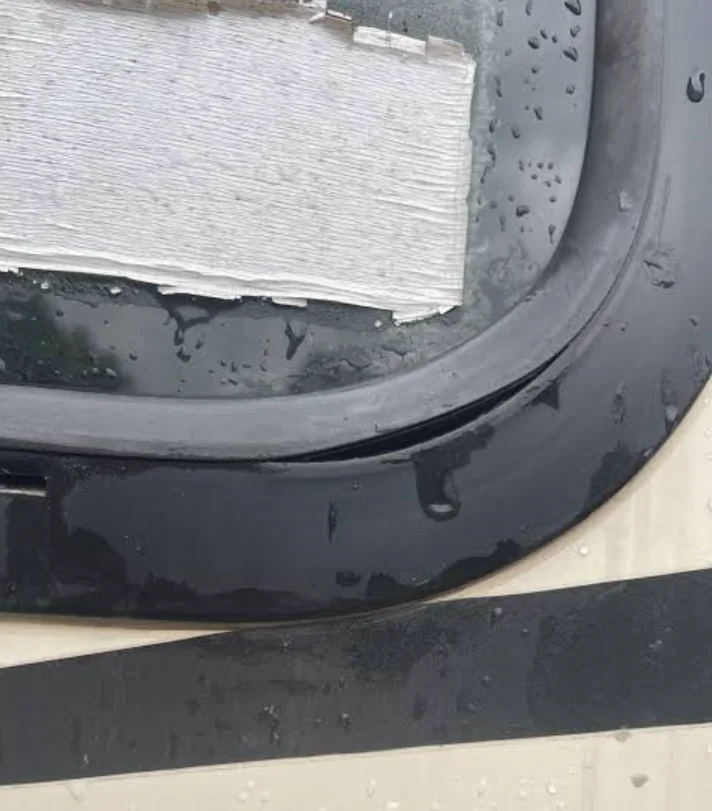
Diagnosing Fiberglass Damage on Palm Bay's Open-Driveway RVs
Fiberglass diagnosis in Palm Bay starts with a UV oxidation assessment before examining any specific damage. Palm Bay's latitude - 28 degrees north - delivers a UV index of 10 to 11 on most summer days. Open-driveway storage without cover produces visible gel coat chalking and color shift within 3 to 5 years on most fiberglass coaches.
The degree of UV oxidation affects the repair approach: moderate oxidation responds to compound polishing, heavy oxidation requires gel coat repair, and complete gel coat thinning from UV exposure requires a respray that changes the repair economics entirely. We assess oxidation depth before quoting any Palm Bay fiberglass repair.
Delamination diagnosis uses both the tap test and a moisture probe. The tap test - knocking on the sidewall with your knuckles - reveals delaminated areas by the hollow drum sound versus the solid thud of sound laminate. We follow up with a moisture probe to check whether active moisture is behind the delaminated area, because UV-driven delamination without moisture is a different repair than moisture-driven delamination from a failed caulk joint.
Caulk joint inspection on Palm Bay driveways requires checking the lower half of the rig specifically.. Palm Bay's flat-driveway pooling-water environment means compartment door caulk on the lower sidewall sits closest to standing water during heavy rainstorms.
The exact cost of your repair depends on your RV make and model, the severity of the issue, and parts availability. Only a technician on-site can provide an accurate estimate after inspecting your RV. A written estimate is provided before any work begins - you approve it before we start.
What to Expect at Your Palm Bay Fiberglass Repair Service Call
We arrive with a gel coat repair kit matched to common RV colors, body filler, compound and polish, and a moisture meter to assess what is behind the damage. The first step on every fiberglass call is determining whether the damage is cosmetic (gel coat only) or structural (fiberglass laminate or substrate involved). These are entirely different repairs with different costs, and we tell you which one you have before writing any estimate.
Gel coat crack repair in Palm Bay's direct sun follows a specific sequence: clean and dry the crack, undercut it slightly with a rotary tool for mechanical grip, fill with color-matched gel coat mixed to the right consistency, allow to cure in direct Florida sun, then wet-sand from 220 to 2000 grit and buff to a gloss match. One crack repair takes about 1.5 to 2 hours from arrival to finished surface.
Impact damage that has penetrated through the gel coat into the fiberglass laminate requires structural body filler first, then gel coat over the top. Color matching older gel coat on Palm Bay's UV-exposed rigs is the most challenging part of the job - open-driveway storage accelerates color shift faster than covered storage, so we dry-blend several tints until we have a match before committing to a panel.
Typical time on-site for a Palm Bay gel coat repair call is 2 to 3 hours for 1 to 2 cracks or chips. Full panel gel coat restoration takes 3 to 5 hours for a 10-foot sidewall section. Delamination assessment adds 30 minutes for moisture mapping and tap testing before we can give an accurate repair scope.
Palm Bay and South Brevard County RV Fiberglass Conditions
Florida's UV index causes gel coat oxidation and fading on outdoor-stored RVs faster than almost any other state. Palm Bay's open-driveway storage pattern - where rigs sit in direct sun for years without cover - accelerates gel coat chalking and color fading faster than shaded or indoor storage.
A fiberglass RV stored unprotected in a Palm Bay driveway will show visible gel coat chalking and color shift within 3 to 5 years of purchase - even on a relatively new rig. Salt air from the Indian River Lagoon adds a secondary degradation factor for eastern Palm Bay neighborhoods, but UV exposure drives fiberglass wear throughout the city regardless of proximity to the water.
Annual compound polish and a UV-protective wax coat are the most cost-effective maintenance for Palm Bay fiberglass. Delamination follows unrepaired water intrusion through caulk joints around compartment doors, windows, and vent covers - we inspect all caulk joints on every fiberglass service call and flag any pulling away from the surface.
How We Diagnose Your RV Fiberglass & Exterior Body Repair
From your first call to a repaired RV - here is what to expect.
Warning Signs for Palm Bay RV Fiberglass
These are stress cracks from coach flexing over road travel. In Palm Bay's UV, they progress faster than in covered or shaded storage. A crack that spans 2 inches in spring may span 4 inches by fall without treatment.
Delamination. The fiberglass skin has separated from the substrate behind it.
This is a structural concern, not cosmetic. The moisture that caused the separation is still behind the skin and will continue spreading.
UV oxidation from Palm Bay's open-driveway sun exposure. The gel coat is thinning.
Compound polishing now costs $300 to $700. Waiting until the gel coat is gone costs $1,500 to $3,000 for a re-spray.
Moisture from failed caulk or Palm Bay driveway pooling water has entered behind the skin and caused the substrate to delaminate. The moisture source must be found before repairing the bubble.
This is the leading fiberglass moisture entry point for Palm Bay's flat-terrain storage environment. Compartment door caulk on the lower half of the rig sits closest to the pooling rainwater on flat Palm Bay driveways.
Impact damage that breaks through the gel coat into the laminate needs repair before Palm Bay's UV and thermal cycling work into the damaged area and expand it. What looks like a 3-inch chip can become a 10-inch delamination by next season.
Road splash combined with UV degradation causes the bottom-skirt area to delaminate faster than any other section. This area sits close to pooling water on flat Palm Bay driveways and is the last thing most owners check.
RV Fiberglass & Exterior Body Repair - What We Fix
RV Fiberglass Types We Repair in Palm Bay
Palm Bay's open-driveway UV environment creates a fiberglass repair profile that differs from salt-air coastal markets. High-gloss fiberglass sidewalls on Class A coaches (Winnebago Vista, Thor ACE, Coachmen Mirada) stored in Palm Bay driveways show gel coat UV oxidation within 3 to 5 years without cover or annual UV wax - full gel coat restoration is achievable on most units under 8 years old if the oxidation is caught before the gel coat thins completely.
Lightly textured fiberglass on Class C coaches stored in Palm Bay requires texture gel coat for crack repairs because the original surface pattern must be matched - standard smooth gel coat repairs are visible from 10 feet. Aluminum-framed fiberglass towable sidewalls (Keystone Cougar, Grand Design Reflection) are the most common fiberglass repair type in Palm Bay - compartment door caulk failures allow moisture from driveway-pooling rain to enter the lower sidewall substrate.
Fiberglass front caps on Class A coaches develop stress fractures at the headlight bezels from road vibration on the route from Palm Bay driveways to Sebastian Inlet or down US-1. We assess the sidewall construction type before quoting any Palm Bay fiberglass repair - the approach differs by substrate.
RV Fiberglass Repair in Palm Bay's Full-Sun Storage Environment
Fiberglass gel coat damage in Palm Bay is predominantly UV-driven. Open-driveway storage without cover in Palm Bay's latitude - only 28 degrees north, where the UV index reaches 10 to 11 on most summer days - causes visible gel coat chalking and color shift within 3 to 5 years on rigs parked in full sun. This is the same UV load that affects barrier island towns, but without the salt air that adds a secondary degradation mechanism at the coast.
The practical result for Palm Bay gel coat repair is that color matching is more challenging. Palm Bay rigs often have significant UV-shifted gel coat before the owner brings them in for a crack repair - the original white or beige has shifted toward gray or yellow, and the repair material needs to match that UV-shifted color rather than the original. We dry-blend gel coat tints until we match the current surface color, not the new-RV color from the factory chart.
Caulk failure around compartment doors, windows, and vent covers is the leading precursor to delamination in Palm Bay's storage environment. UV degrades the flexible caulk compound, it shrinks away from the edges, and water begins entering behind the skin.
In Palm Bay's flat-driveway pooling-water environment, compartment door caulk on the lower half of the rig is particularly vulnerable - the sill sits closer to pooling rain water than on a campground-graded site. We inspect all caulk joints on every fiberglass service call and flag any that are pulling away.
Delamination on Palm Bay rigs is typically less advanced than on coastal campground rigs because the driving mechanism is UV rather than salt air moisture - UV-driven delamination progresses more slowly. However, delamination from failed caulk and ground-level water entry can be rapid once water gets behind the skin in Palm Bay's summer rain season. We use a moisture probe and tap test to map the full delamination extent before recommending repairs - what looks like a 12-inch bubble often has a much larger moisture zone behind it.
RV Fiberglass & Exterior Body Repair FAQ
My Palm Bay RV gel coat is turning gray and chalky. Can that be fixed?
Yes, if the oxidation has not thinned the gel coat completely. Moderate UV oxidation - chalky or dull surface without color shift - responds to compound polishing and buffing. Heavy oxidation with a gray cast and color shift indicates significant gel coat thinning.
Palm Bay's UV is intense enough to cause visible oxidation on open-driveway rigs within 3 to 5 years without cover or annual UV wax. We assess oxidation depth before quoting - this determines whether compound polishing is sufficient or whether gel coat repair is needed.
What causes RV fiberglass delamination in Palm Bay?
Two causes. Failed caulk joints around compartment doors, windows, and vent covers allow moisture behind the skin. In Palm Bay's flat-driveway environment, compartment door caulk on the lower half of the rig sits closest to pooling rainwater during summer storms.
The second cause is UV-driven gel coat thinning that allows thermal cycling stress to propagate micro-cracks into the laminate. Palm Bay's UV-driven delamination progresses more slowly than salt-air-driven delamination, but it is active and will spread if not repaired.
What does RV fiberglass repair cost in Palm Bay?
The service call is $299 to $399 covering travel to your Palm Bay location and assessment. Small crack or chip repair is $150 to $350. Impact damage repair is $350 to $800.
Gel coat oxidation compound and polish is $300 to $700 for a full side or cap restore. Delamination assessment with written report is $150 to $400. Written estimate before any repair work begins.
Can you match my Palm Bay RV's gel coat color for a crack repair?
In most cases, yes - with the understanding that UV-shifted gel coat requires matching to the current color, not the original factory color. Palm Bay open-driveway rigs often have gel coat that has shifted toward gray or yellow from UV exposure before the owner brings them in for a crack repair. We dry-blend gel coat tints until we match the current surface color.
A match to the original factory color on a UV-shifted surface will be visibly different. We show you the color match before applying.
My Palm Bay RV sidewall sounds hollow when I tap it. Is that serious?
Yes. That hollow drum sound is delamination - the fiberglass skin has separated from the substrate behind it. This is a structural concern, not cosmetic.
In Palm Bay, delamination driven by failed caulk and ground-level water entry can progress rapidly in one rainy season. We use a moisture probe to check whether active moisture is behind the delaminated area, which determines whether the repair is a dry rebonding or a wet substrate replacement.
Can you repair RV fiberglass at my Palm Bay driveway or does the rig need to go to a shop?
Most cosmetic and moderate fiberglass repairs - gel coat cracks, chips, caulk failure, compartment door corner cracks - are done on-site at your Palm Bay driveway. We carry gel coat materials, body filler, and sanding supplies on the service van.
Full panel delamination where the structural substrate needs replacement requires a shop environment. We assess on-site and tell you upfront whether your repair can be done at your driveway.
What causes hairline cracks at my Palm Bay RV's slide-out room corners?
Stress cracks from coach flexing over road travel. In Palm Bay, the route from residential driveways to Sebastian Inlet State Park on US-1 runs through 20 miles of variable road quality. The slide-out room corners are the highest-stress points on the sidewall during road flex.
Palm Bay's UV accelerates stress crack progression - what starts as a 2-inch hairline in spring may span 4 inches by fall without treatment. We inject structural filler and cover with color-matched gel coat for slide corner repairs.
How do I protect my Palm Bay RV's fiberglass from UV damage?
Annual compound polish and a UV-protective wax coat are the most cost-effective maintenance. This removes the damaged oxidized surface layer, exposing fresh gel coat beneath, and applies a UV barrier that slows re-oxidation. Doing this annually costs $300 to $700.
Waiting until the gel coat has thinned significantly requires a gel coat respray at $1,500 to $3,000 for a full side. The other essential is annual caulk inspection on all compartment doors and windows - failed caulk is the leading fiberglass moisture entry point for Palm Bay driveways.
My Palm Bay RV has an impact crack from backing into something. How urgent is the repair?
Fairly urgent if the impact broke through the gel coat into the laminate. In Palm Bay's UV and thermal cycling, an open laminate crack picks up moisture at every rain event, and the heat/cool cycle drives it deeper. What looks like a 3-inch chip can delaminate to a 10-inch area within one rainy season.
We repair impact damage before it spreads. A crack that is only gel coat deep is less urgent but should be repaired before it allows moisture intrusion.
What is the difference between Palm Bay RV fiberglass repair and what a body shop does?
RV gel coat is a pigmented polyester resin that forms the outer surface - it is not painted over. An auto body shop uses paint systems designed for steel or aluminum panels with a primer layer. Paint applied over gel coat peels within 1 to 2 Florida weather seasons.
We use gel coat repair kits color-matched to the original or UV-shifted surface, applied to properly prepared fiberglass substrate. The repair looks correct and lasts because the material is compatible with the original construction.
How do I know if my Palm Bay RV's caulk is failing?
Look at the caulk joints around every compartment door, window, vent cover, and roof trim piece. Healthy caulk is flexible, adheres to both surfaces, and has no gaps. Failing caulk pulls away from one or both surfaces, has visible cracks, or has shrunk and developed gaps.
In Palm Bay, UV degrades flexible exterior caulk faster than in cooler climates - caulk around compartment doors typically needs inspection every 2 years. Failed lower-sidewall caulk in Palm Bay's flat-driveway environment allows pooling rainwater to enter behind the skin at every storm.
RV Fiberglass & Exterior Body Repair available in: MelbourneWest MelbourneMalabarMiccoGrant-ValkariaSebastianVieraRockledge and all of Brevard County →