RV Water Damage Repair - Walls, Floors & Ceilings
RV Repair Palm Bay assesses and repairs RV water damage in Palm Bay and south Brevard County. Palm Bay's flat terrain and heavy summer rain creates standing water under stored RVs - condensation and ground moisture enter through floor vents and low-side seams on rigs parked in ungraded driveways.
We locate the actual entry point, treat mold, and repair subfloor, wall panels, and ceiling materials on-site. Early action prevents structural damage.
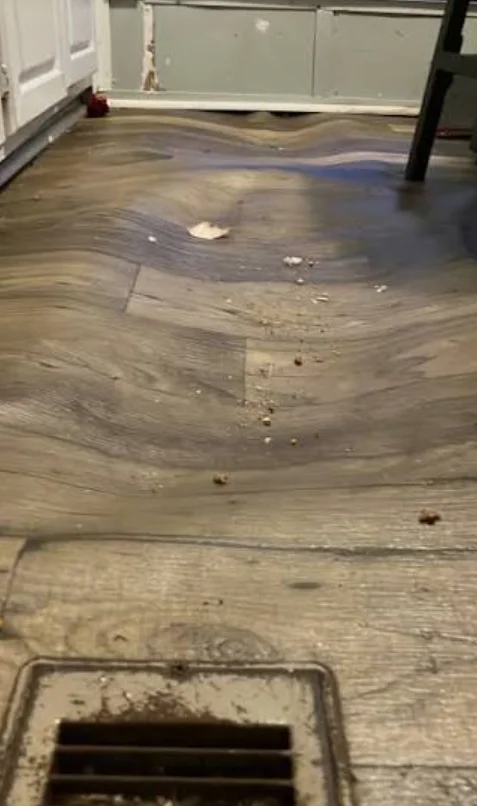
Assessing RV Water Damage on Palm Bay Driveway-Stored Coaches
Water damage assessment in Palm Bay requires evaluating two entry paths that campground-market assessment often misses. The first is the standard roof entry - failed lap sealant at AC boot seals, vent bases, and antenna mounts allowing rain from Palm Bay's June through September rainy season to enter the ceiling cavity.
The second is ground-level entry specific to Palm Bay's flat residential terrain: standing water under driveway-stored RVs that enters through lower sidewall seams, floor vents, and underbelly compartment access panels during heavy summer storm events. Palm Bay's flat driveways regularly pool 2 to 4 inches of water under parked RVs during intense rainstorms.
We use a Tramex non-invasive moisture meter to map every accessible wall and floor section in the affected zone. The moisture map reveals whether the entry path is from above or below and determines the repair sequence: stop the entry first, dry the structure second, repair the damage third. A ceiling stain after a storm does not necessarily indicate a roof leak - if the floor sections below the stain also show elevated moisture, the entry may be at the lower sidewall or underbelly, not the roof.
Mold establishes in RV wall cavities within 48 to 72 hours of water intrusion in Palm Bay's summer humidity.. A musty smell inside a coach that has been closed up after a storm means water is already in the structure.
The exact cost of your repair depends on your RV make and model, the severity of the issue, and parts availability. Only a technician on-site can provide an accurate estimate after inspecting your RV. A written estimate is provided before any work begins - you approve it before we start.
What to Expect at Your Palm Bay Water Damage Service Call
We arrive with a Tramex RWS non-invasive moisture meter and a probe moisture meter for deeper readings. The first thing we do on every water damage call is find the leak source - treating mold or replacing panels without stopping the leak means redoing the work in 6 months. We map the moisture extent before recommending any repairs.
Moisture mapping in Palm Bay requires attention to the specific entry points common here. Palm Bay's flat terrain means low-side seams and floor vents on rigs parked in ungraded driveways collect standing water during heavy summer rains.
We check the roof penetrations, the slide-out gutter drains, and the lower sidewall caulk joints in that order. Water in an RV travels along framing members and can appear 2 to 4 feet from the actual entry point.
After mapping moisture and finding the source, we give you a written estimate in two parts: the leak source repair (which must happen first) and the interior damage repair. Some customers address the leak and let the structure dry before scheduling interior work - that is a valid approach and we build estimates that way when asked.
Interior repair work includes subfloor replacement, wall panel replacement, ceiling panel replacement, and anti-microbial treatment of affected cavities. Smaller repairs - a soft spot under 4 square feet, one ceiling panel - are often completed same day. Larger structural repairs typically require a morning start and a full day on-site.
Palm Bay and South Brevard County RV Water Damage Conditions
Palm Bay's 54-inch annual rainfall and hurricane season from June through November make water damage a significant RV maintenance risk throughout south Brevard County. The water damage pattern in Palm Bay has a specific twist not common in campground markets: Palm Bay's flat terrain means open driveways collect standing water under and around parked RVs during heavy summer rains.
Ground moisture enters through floor vents, low-side caulk joints, and unsealed compartment floor penetrations - particularly on older travel trailers and fifth wheels that were not designed with long-term residential storage in mind. The most common roof-entry sequence still applies - failed lap sealant at the AC boot or vent base, water into the ceiling cavity, stain appearing 2 to 3 feet from the entry point - but Palm Bay owners should also check the lower sidewall and floor seams after any significant storm.
In south Brevard's humidity, mold establishes in RV wall cavities within 48 to 72 hours of water intrusion.
How We Diagnose Your RV Water Damage Repair
From your first call to a repaired RV - here is what to expect.
Warning Signs for Palm Bay RV Water Damage
Active roof leak. The stain is not where water is entering - it is where water is dripping after traveling along structural members. The entry point is typically 1 to 3 feet from the visible stain.
Subfloor delamination from water intrusion. Palm Bay's flat-driveway pooling water during heavy rainstorms enters through floor vents and low-side seams on rigs not designed for residential driveway storage.
Active mold growth in the wall or ceiling cavity. In Palm Bay's summer humidity, mold establishes in RV wall cavities within 48 to 72 hours of water intrusion. A musty smell after a storm means water is already in the structure.
Moisture behind the wall panel has caused the substrate to soften and delaminate from the adhesive. The moisture source must be found and stopped before repairing the panel or it will fail again.
The slide gutter drain is blocked. Palm Bay neighborhoods with tree canopy - especially near Turkey Creek Sanctuary - have heavy debris loads that block slide gutters. When the gutter overflows, it leaks into the slide room from above.
Long-term moisture exposure. Surface rust on interior components means moisture has been present repeatedly. This is a secondary indicator of a chronic entry point that has been active for months or years.
Active moisture behind the skin. Delamination driven by water intrusion expands as water migrates outward from the entry point. The entry point must be stopped or the repair area doubles with each rainy season.
RV Water Damage Repair - What We Fix
RV Water Damage Types We Address in Palm Bay
Water damage in Palm Bay RVs comes from two entry paths that are both common and both must be checked on every damage call. The first path is the standard roof entry - failed Dicor lap sealant at AC boot seals, vent bases, and antenna mounts that allows rainwater from Palm Bay's June through September rainy season to enter the ceiling cavity.
The second path is specific to Palm Bay's flat residential terrain: standing water under driveway-stored RVs that enters through lower sidewall seams, floor vents, and underbelly compartment panels during heavy summer storms. This ground-level entry path does not exist at graded campground pads - it is a Palm Bay driveway failure mode that roof-only inspection misses.
The substrates we repair most often are luan plywood subfloor, OSB decking in newer coaches, thermoplastic wall panels, and vinyl ceiling material. We use marine-grade plywood for structural subfloor repairs in Palm Bay where the driveway moisture exposure will continue after repair.
RV Water Damage Assessment in Palm Bay's Flat Terrain and Storm Environment
Water damage in Palm Bay RVs comes from two directions that are equally important to assess. The first is the standard roof entry - failed lap sealant at AC boot seals, vent bases, and antenna mounts that allows rain to enter during the June through September rainy season. The second is ground-level entry that is specific to Palm Bay's flat terrain: standing water under driveway-stored RVs that enters through lower sidewall seams and floor vents during heavy summer rain events.
Palm Bay gets 54 inches of rain per year, with the heaviest events concentrated in June through September. When 2 to 3 inches of rain falls in an hour on flat Palm Bay terrain, residential driveways without adequate grade toward the street pool water under parked RVs.
This is not an RV design failure - travel trailers and fifth wheels are designed for campgrounds with graded drainage. In Palm Bay driveways, the low-side floor vents and underbelly compartment access panels sit closer to pooling water than the manufacturer assumes.
We always check both entry paths on Palm Bay water damage calls. A Tramex non-invasive moisture meter reads through walls and ceiling panels without drilling.
We map every accessible wall and floor section in the affected zone before recommending any repairs. The moisture map tells us whether the entry is from above (roof) or below (ground level) and determines the repair sequence - stopping the entry point first, then drying the structure, then repairing the damage.
In Palm Bay's summer humidity, mold establishes in RV wall cavities within 48 to 72 hours of water intrusion. Visible mold on interior wall panels means water has been present for at least 2 to 3 days. Any musty smell from an RV that has been closed up after a storm warrants a moisture inspection before the next trip - mold in the wall cavity grows silently for weeks before it shows on the surface.
RV Water Damage Repair FAQ
What causes water damage in Palm Bay RVs that is different from other markets?
Palm Bay has a water entry path that campground markets do not. Palm Bay's flat residential driveways pool 2 to 4 inches of water under and around parked RVs during heavy summer rain events.
Ground moisture enters through lower sidewall seams, floor vents, and underbelly compartment panels on rigs not designed for flat residential driveway storage. Combined with the standard roof entry path from UV-failed lap sealant, Palm Bay rigs have two independent water entry mechanisms that both need to be checked after any significant storm.
Water stained my RV ceiling during a Palm Bay summer storm. What should I do first?
Do not wait to see if it happens again. Take photos of the stain and mark the edges with painter's tape to track whether it grows. In Palm Bay's summer humidity, mold establishes in RV wall cavities within 48 to 72 hours of water intrusion.
By the time you have had three storms to confirm the stain is growing, the cavity is already compromised. Call for a moisture meter inspection before the next storm rather than after.
What does RV water damage repair cost in Palm Bay?
Water damage assessment and mapping with a written report is $150 to $300. Subfloor soft spot repair on a small section under 4 square feet is $400 to $900. Interior wall panel replacement is $300 to $800 per section.
Mold treatment of a small area is $200 to $500. The entry point repair (roof reseal or lower sidewall caulk) is priced separately and completed first. Written estimate before any structural work begins.
My Palm Bay RV floor is soft near the entry door. Is that from roof water or ground water?
In Palm Bay, entry door soft floors often trace to lower sidewall caulk failure or the entry door threshold seal. Ground water pooling against the step and door threshold enters through the gap and saturates the subfloor directly.
We check the threshold seal condition and lower sidewall caulk around the entry before looking at the roof. A moisture meter reading through the floor near the door tells us whether the entry is from above, below, or the threshold itself.
How quickly does mold grow in a Palm Bay RV after a water intrusion event?
In Palm Bay's summer humidity, mold establishes in RV wall cavities within 48 to 72 hours of water intrusion. A storm on Monday evening can have active mold growth in the wall cavity by Wednesday morning. Visible mold on the surface of wall panels means water has been present for at least 2 to 3 days.
Any musty smell after a storm warrants an immediate moisture inspection. We use anti-microbial treatment on every Palm Bay water damage repair before closing any cavity.
Can you repair RV water damage at my Palm Bay driveway?
Yes. We bring moisture detection equipment, luan plywood, marine-grade plywood for subfloor repairs, and anti-microbial treatment on water damage calls.
Assessment, moisture mapping, entry point identification, and smaller structural repairs are done on-site. Major subfloor or wall panel replacement involving significant teardown is typically scheduled as a multi-day job at your Palm Bay property.
What is the difference between roof leak damage and slide gutter damage in Palm Bay?
Roof leak damage enters at failed sealant penetrations on the roof surface - AC boot seals, vent bases, antenna mounts - and stains ceiling panels. Slide gutter damage occurs when the slide roof gutter drain backs up - often from Palm Bay tree debris - and water overflows into the slide room through the gutter seal.
Slide gutter damage shows as ceiling staining inside the slide room specifically, and the slide room floor may feel soft near the rear wall. Both require different entry point repairs and both are assessed on every Palm Bay water damage call.
My Palm Bay RV has a musty smell inside but no visible stains. Is that a problem?
Yes. A musty smell without visible staining means active moisture is in the wall or ceiling cavity before it has stained through to the visible surface. In Palm Bay's humidity, mold has already established by the time the smell is detectable.
A non-invasive moisture meter inspection can find the wet area without opening any walls. The earlier this is found, the smaller the repair. Waiting for a visible stain allows the moisture zone to spread for weeks or months.
What type of wood do you use for subfloor repair in Palm Bay RVs?
Marine-grade plywood for any section in Palm Bay's driveway-storage environment. Standard luan plywood and OSB decking are common factory materials but they are not moisture-resistant.
In Palm Bay, where the repaired section will continue to be exposed to the same humidity and potential pooling water that caused the original damage, marine-grade plywood at the same price point provides meaningfully better long-term performance. We use Fiberock board for wall sections in high-moisture locations.
How do I prevent water damage on my Palm Bay RV stored in the driveway?
Annual roof inspection before the June rainy season. Annual lower sidewall caulk inspection on all compartment doors and windows. After every major summer storm, do a quick interior check - ceiling, floor near entry, and slide room ceiling.
Park the rig with a slight slope toward the rear if possible to encourage ground water to drain away from the rig rather than pooling under it. A $200 annual inspection catches $2,000 worth of deferred water damage before it gets structural.
RV Water Damage Repair available in: MelbourneWest MelbourneMalabarMiccoGrant-ValkariaSebastianVieraRockledge and all of Brevard County →